Isthmus Peak is a track many people call the equivalent of the hugely popular Roys Peak, which is also near Wanaka. I have walked both, and at the end of this report I will try to make the case for and against each of them.
Technically the track is not very difficult: almost the whole way follows a well-formed trail where it is practically impossible to get lost. The main challenge is that the route wears you down physically. You have to climb more than a thousand metres, walk 8 kilometres one way, and 16 there and back. For all the simplicity of the trail, you need to be in shape. I went a week after a cold and possibly had not fully recovered, and this walk was very hard on me.
The track splits into three rough sections: 2.5 kilometres climbing 200 metres along the farms, 3.6 kilometres climbing 650 metres up winding switchbacks, and 2 kilometres with 200 metres of gain along the saddle of the ridge. I will go through them in order.
The first section starts the climb, and it lets you warm up and get ready for the suffering ahead. The track runs right alongside the farm, and losing your way here is hard: everything is intuitive and there are signposts. The first two kilometres stay fairly low, so there is not much to see yet. But you can meet grazing sheep, and if you are lucky, deer.
The track crosses private land
Almost the whole route runs through Glen Dene Station, a working sheep and deer farm. Hence the restrictions: from 20 November to 20 December the track is closed while the deer are fawning, and from March to May there is safari hunting on the station, so DOC asks you to stay visible. Roys Peak nearby closes on different dates, from 1 October to 10 November, and that closure is for lambing. The dates do not overlap, so at least one of the two tracks is open.
The second section is a long, drawn-out set of switchbacks. In practice it is a wide 4WD road that nobody drives, and it has a fairly steep gradient.
If you go in winter, the higher you climb the more likely you are to find snow. We walked at the end of June, and there was not much of it, mostly where the sun does not reach. The DOC website lists avalanches as one of the hazards, but honestly I struggle to picture where they would come from. The climb does not feel steep enough to become dangerous under snow. That said, this is my own guesswork based on one walk when there was not much snow, so you need to check the conditions yourself on the day you go.
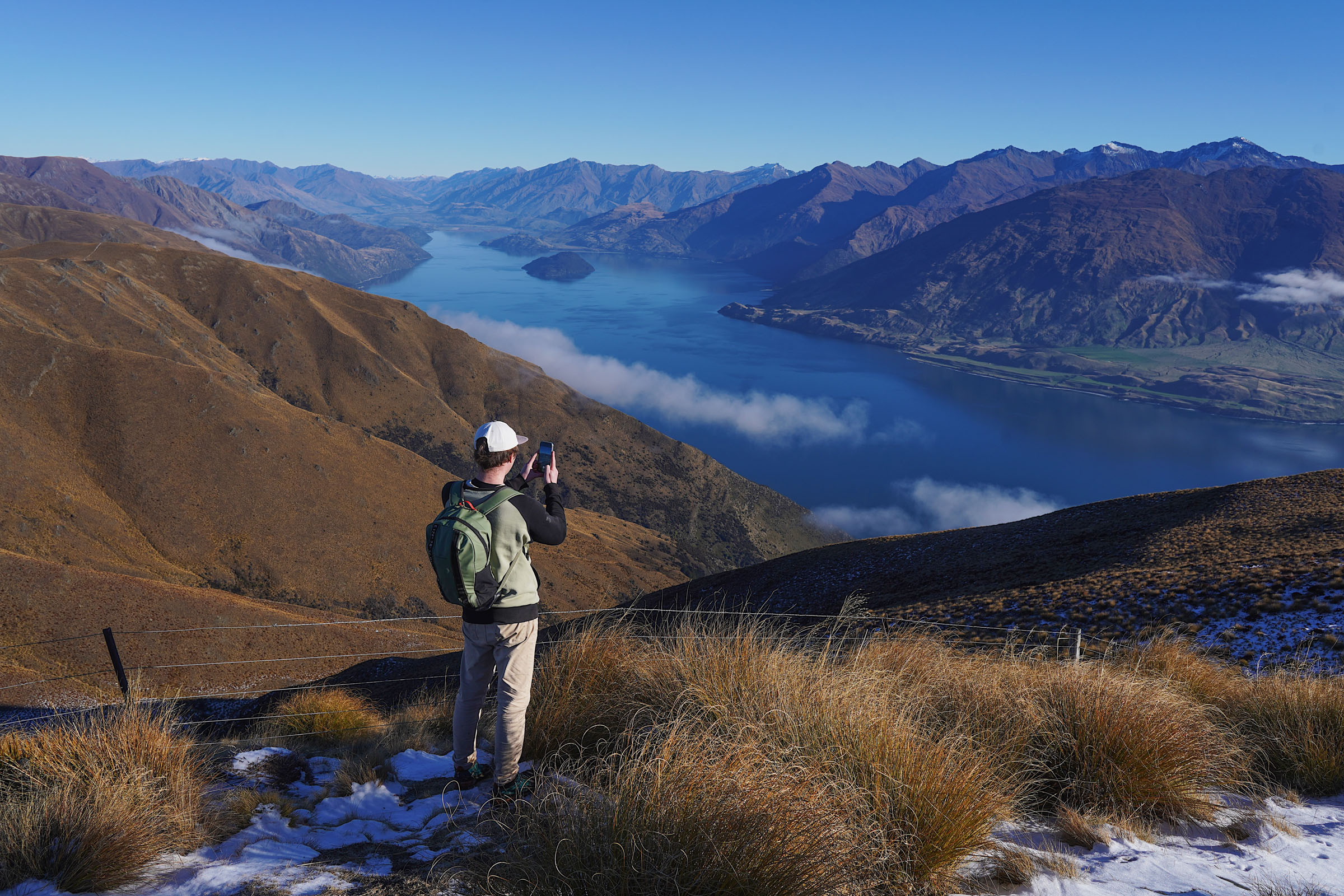
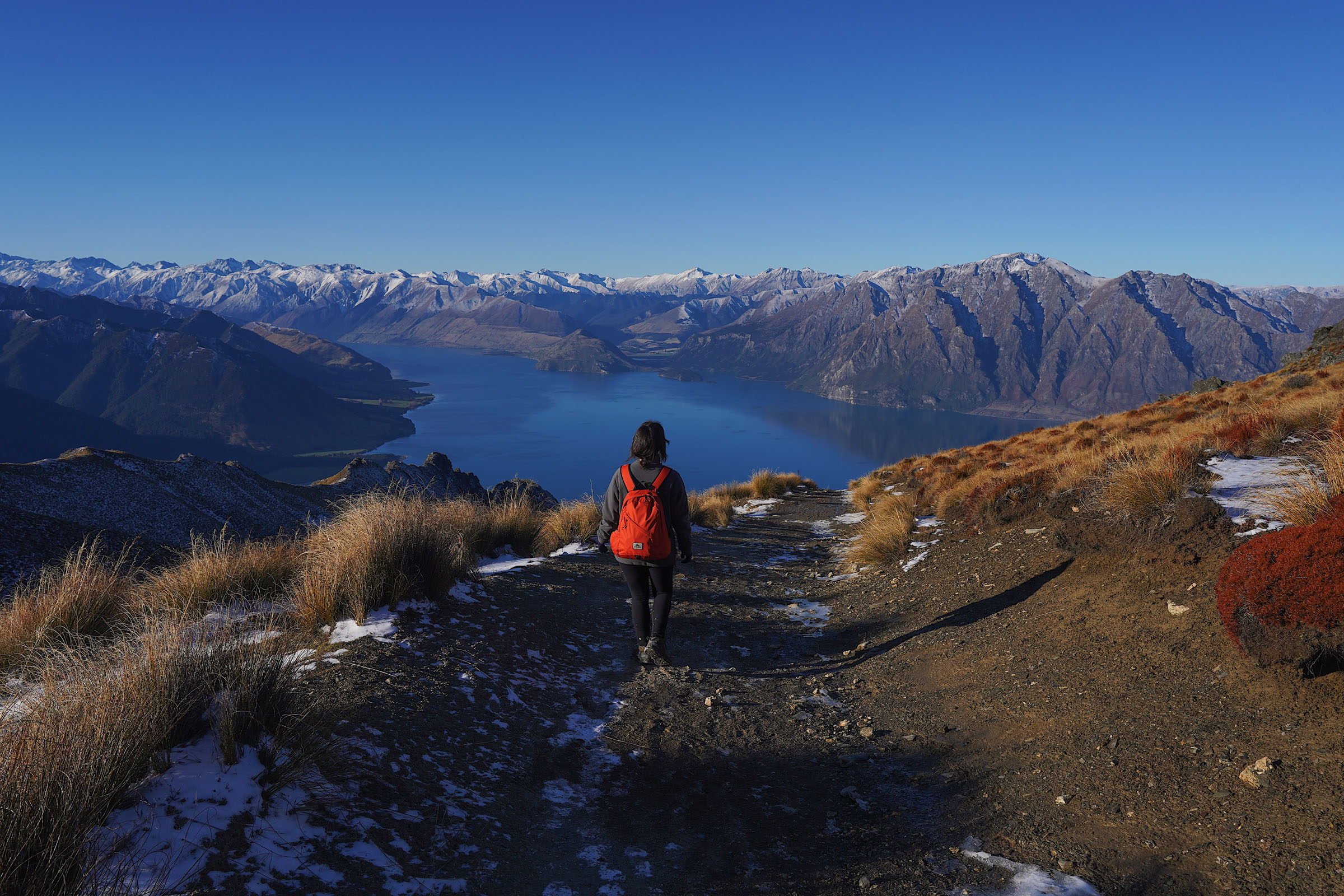
The climb is monotonous, but fortunately the higher you get, the more the views over Lake Hāwea and the mountains above it open up. The good part is that at every turn of the switchbacks the scene shifts slightly and new panoramas appear.
Here are a few more shots from this part of the climb.
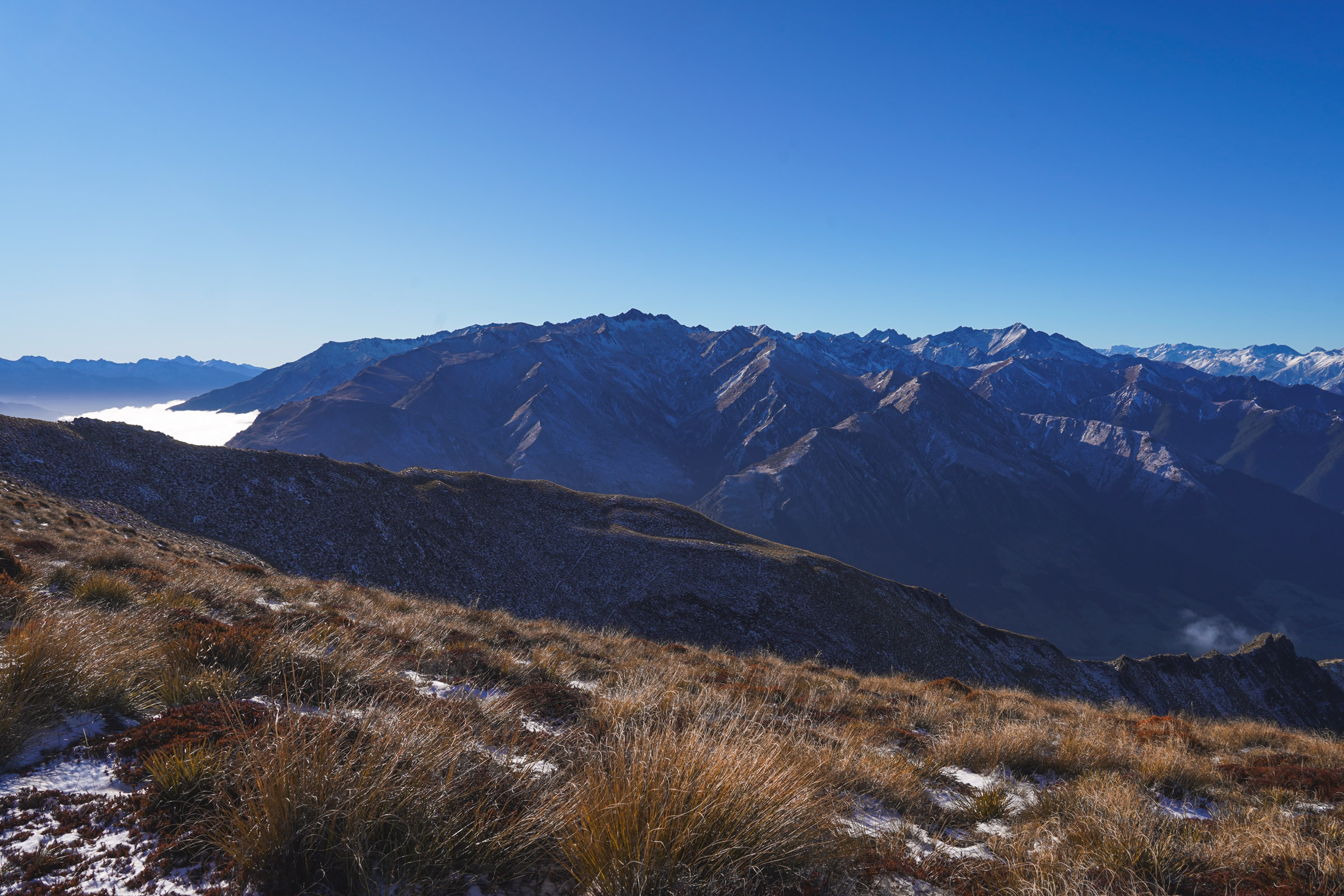
Once the switchbacks are behind you, you reach the last section, and from here you can already see the final point you have to climb: it is off in the distance to the right. It will look like there is not much left, but in fact it is another whole quarter of the climb. By this stage your legs will be starting to tire.
As you climb, even more panoramas over Lake Hāwea open up.
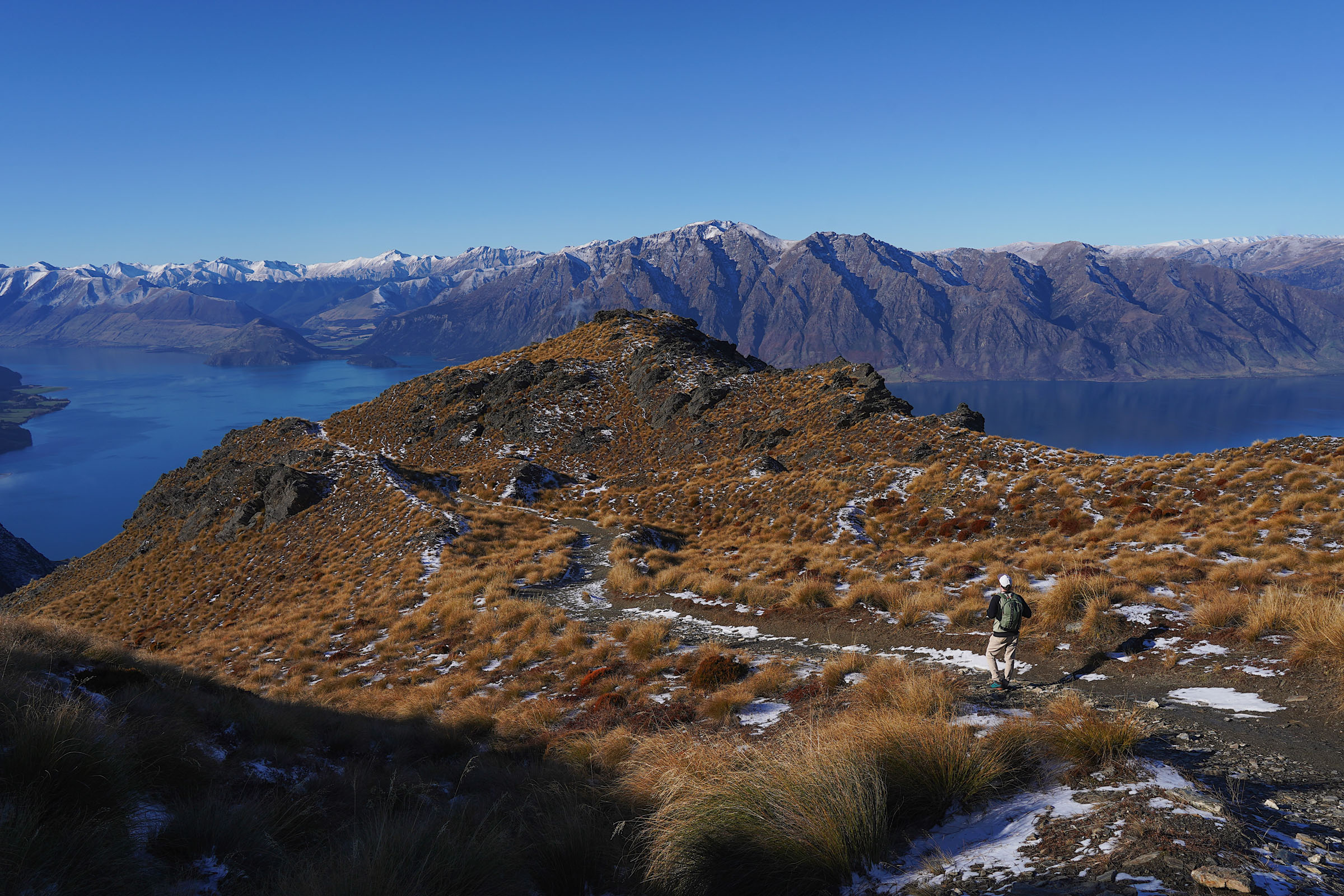
Once you reach the saddle of the ridge you will come to a junction. Ours is to the right, towards Isthmus Peak. To the left a long track runs towards Mount Burke and on to Wanaka itself (I have not been that way yet).
A few hundred metres before the final point, a view of Lake Wanaka opens up on your left, while Hāwea is still there on your right.
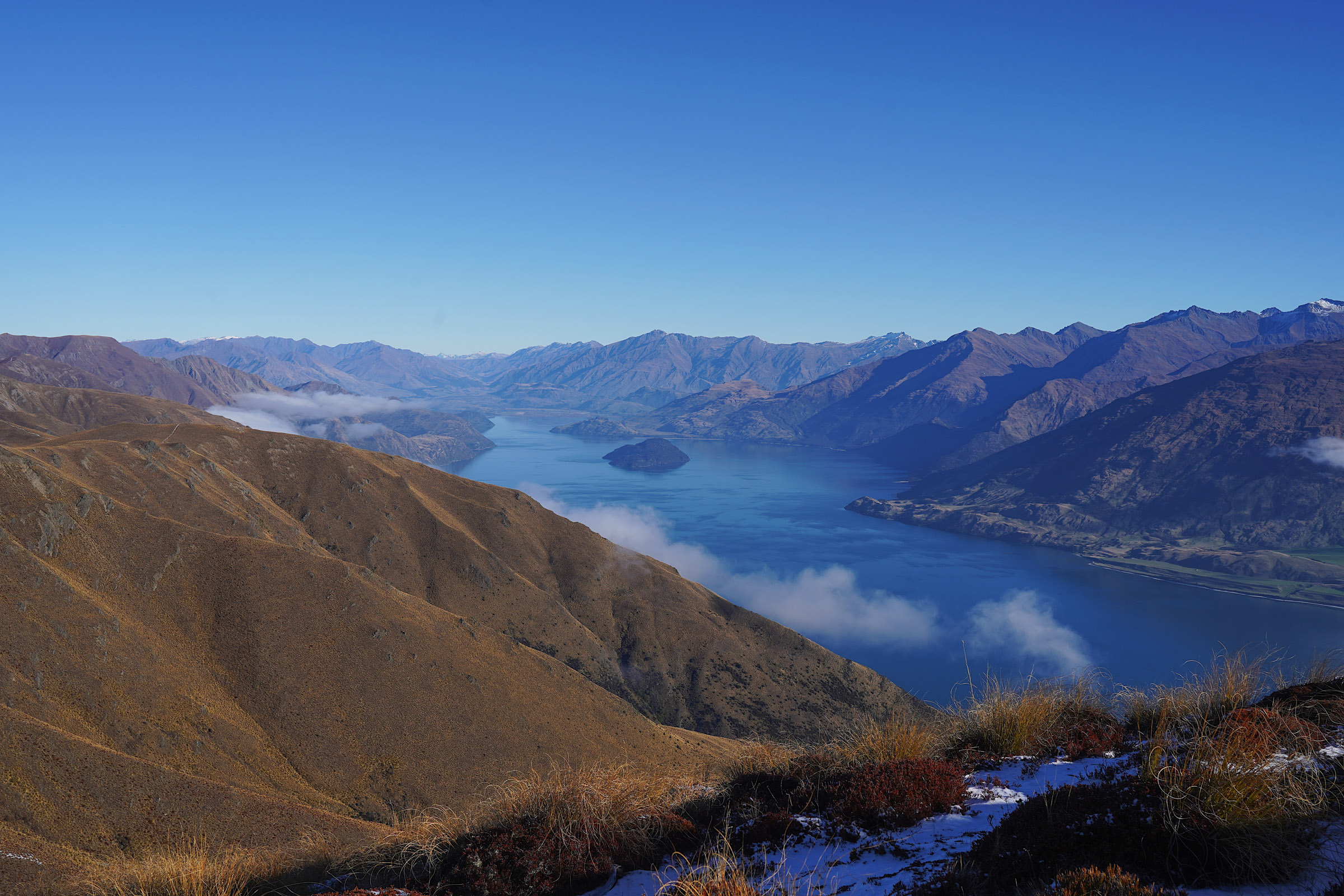
Two lakes
The isthmus the track follows is called The Neck. At its narrowest it is only about a kilometre and a half wide. During the last ice age two separate glaciers moved down the two neighbouring valleys. It was those glaciers that carved out the basins of what are now Lakes Wanaka and Hāwea. As the ice melted and retreated it left ridges of rock and debris in front of it, which blocked the water's outlet and formed the lakes. Around The Neck the two glaciers once almost met.
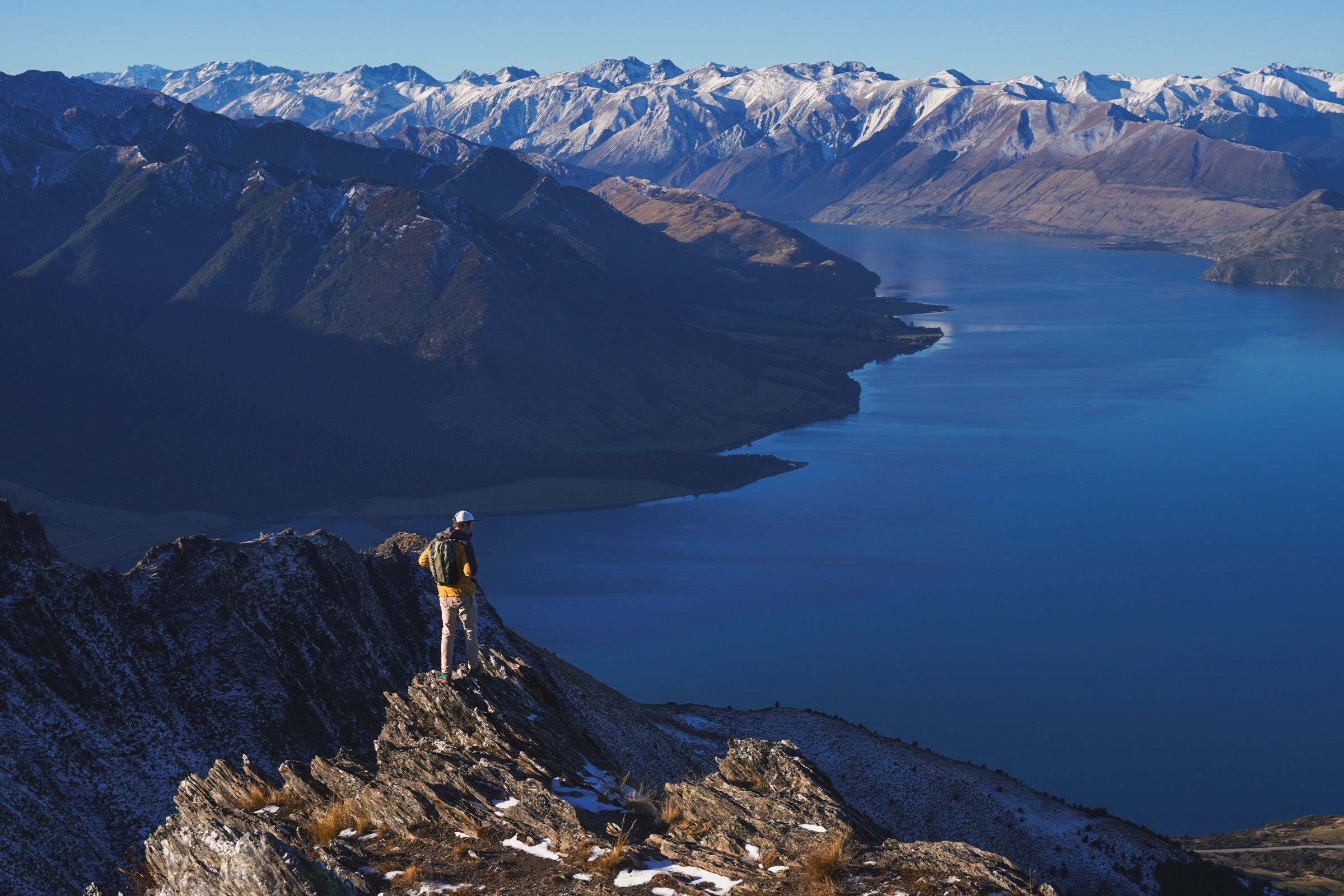
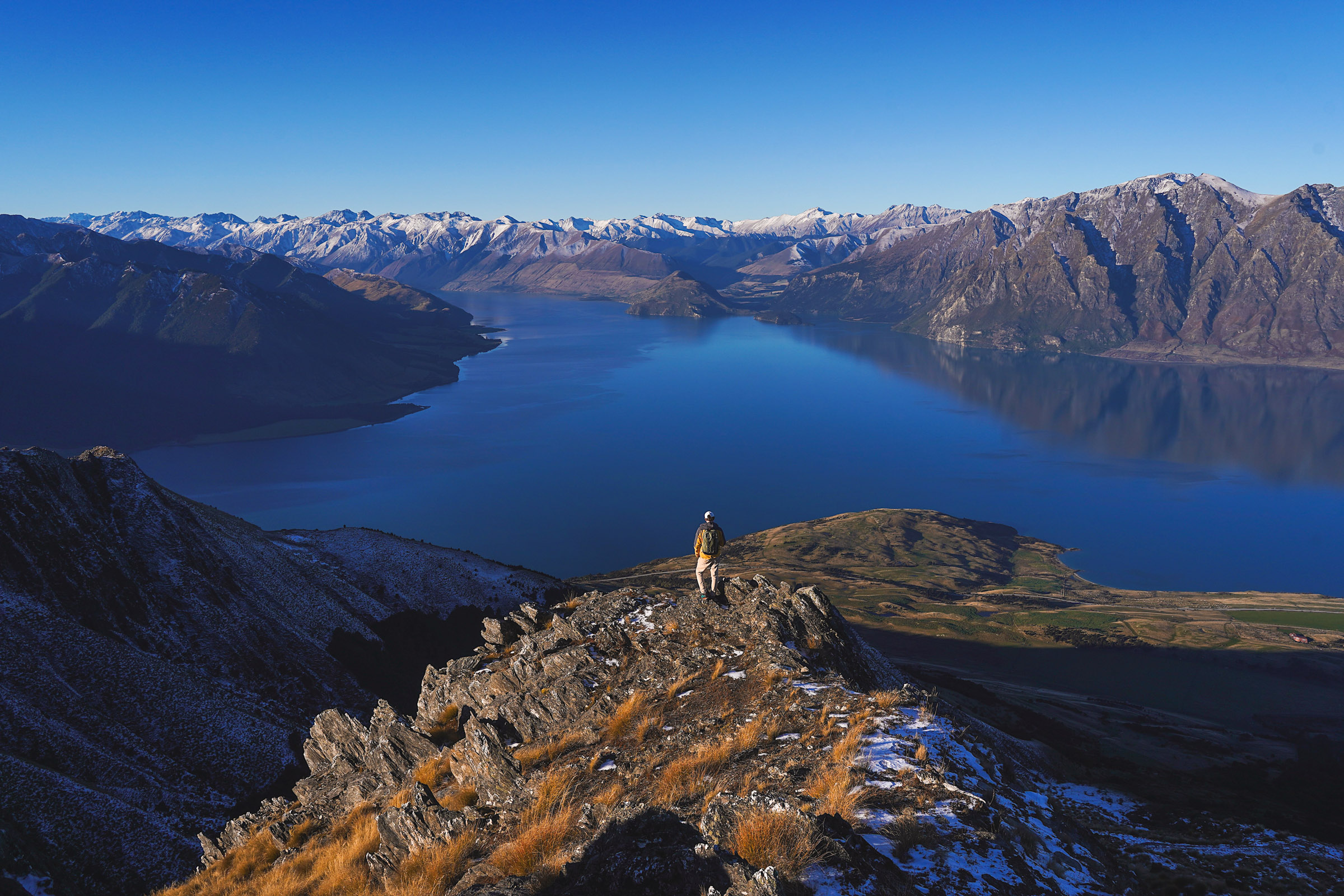
After the final climb you arrive at the summit of Isthmus Peak. It took us about three hours to get here. And so you are at the top and... on the whole the view from up here no longer feels as striking as what you have already seen on the way up. Yes, there is more of Wanaka from here, yes, Hāwea is just as visible, yes, you can see the mountains of Aspiring National Park. But unlike Roys Peak, there is no single vantage point here that gives you the perfect picture of everything around.
It may sound like I have become spoiled (you may well be right), but at the end of this report I will explain in more detail what I mean, when I compare this track with Roys Peak. For now, here are some photos from the summit itself.
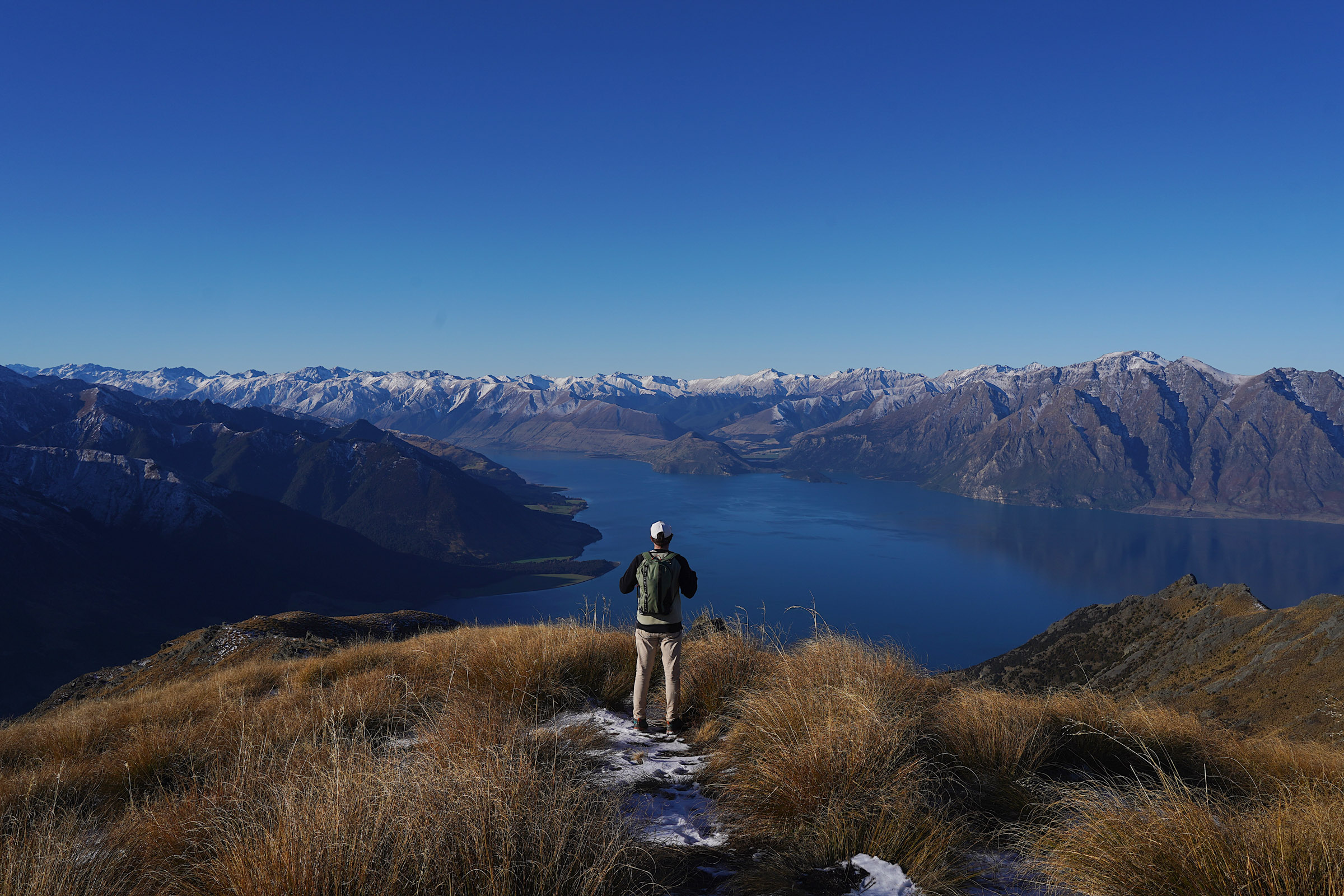
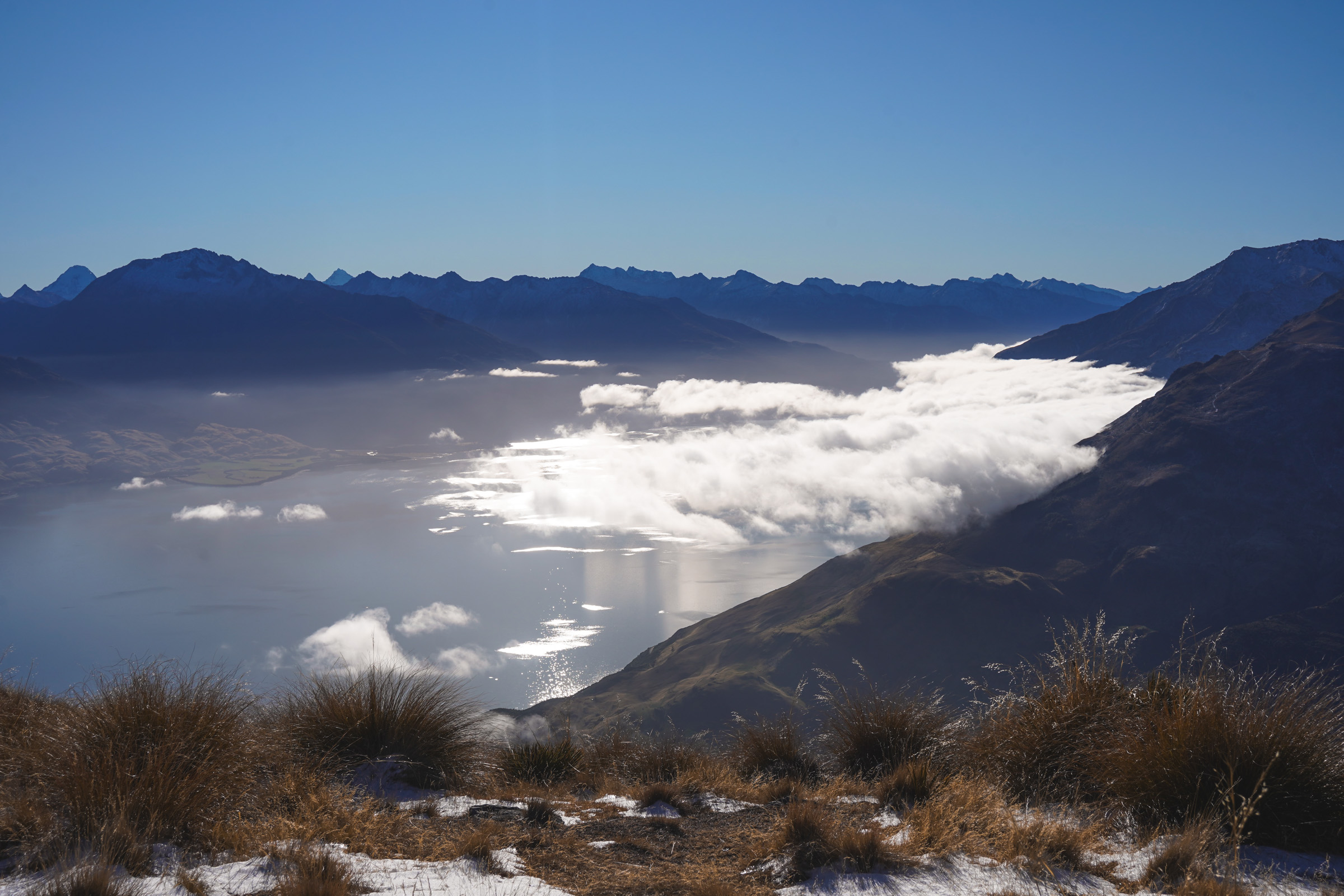
I have not said anything about the weather, and you might expect the standard advice to follow: wait for a clear, cloudless day. But with Isthmus Peak it is not that simple. Low cloud is common here, and it covers the lakes without reaching the summit. On days like that you can literally end up above the clouds. I have not been lucky enough to see it with my own eyes yet, but one day I will come back for that view.
Temperature inversion
An inversion often produces low cloud and fog. At night, especially when the sky is clear and there is little wind, the ground cools quickly. It also cools the air directly above its surface. The air higher up stays warmer, because it depends less on the temperature of the ground. The result is cold air at the surface with warmer air above it. Because of that difference the layers mix poorly, so the cold, damp air stays low. Moisture gradually builds up in it, and fog or low cloud forms. That is why the valley can be cold and overcast while, if you climb higher, you end up above the cloud in the sun.
You should still check the forecast, of course. If dense high cloud is expected, there is not much point in going. But if the forecast promises low cloud, it is definitely worth the gamble, though nobody can guarantee the summit will sit above it. Before you set out I would suggest looking at Windy and the webcams on Roys Peak. They usually tell you what height the cloud is sitting at in this region. Here is a photo I found online showing what the view from this track can look like during an inversion.
In winter it can be cold at the top, especially with the wind. Half an hour is usually enough to sit down, take in the views, have something to eat, and head back.
The way back follows the same road, and there are another 8 kilometres to walk. Going down is easier, but the distance is still long, so you have to keep at it. By this time the sun will be lower, the light will have changed, and you can take a few more shots of the landscape around you.
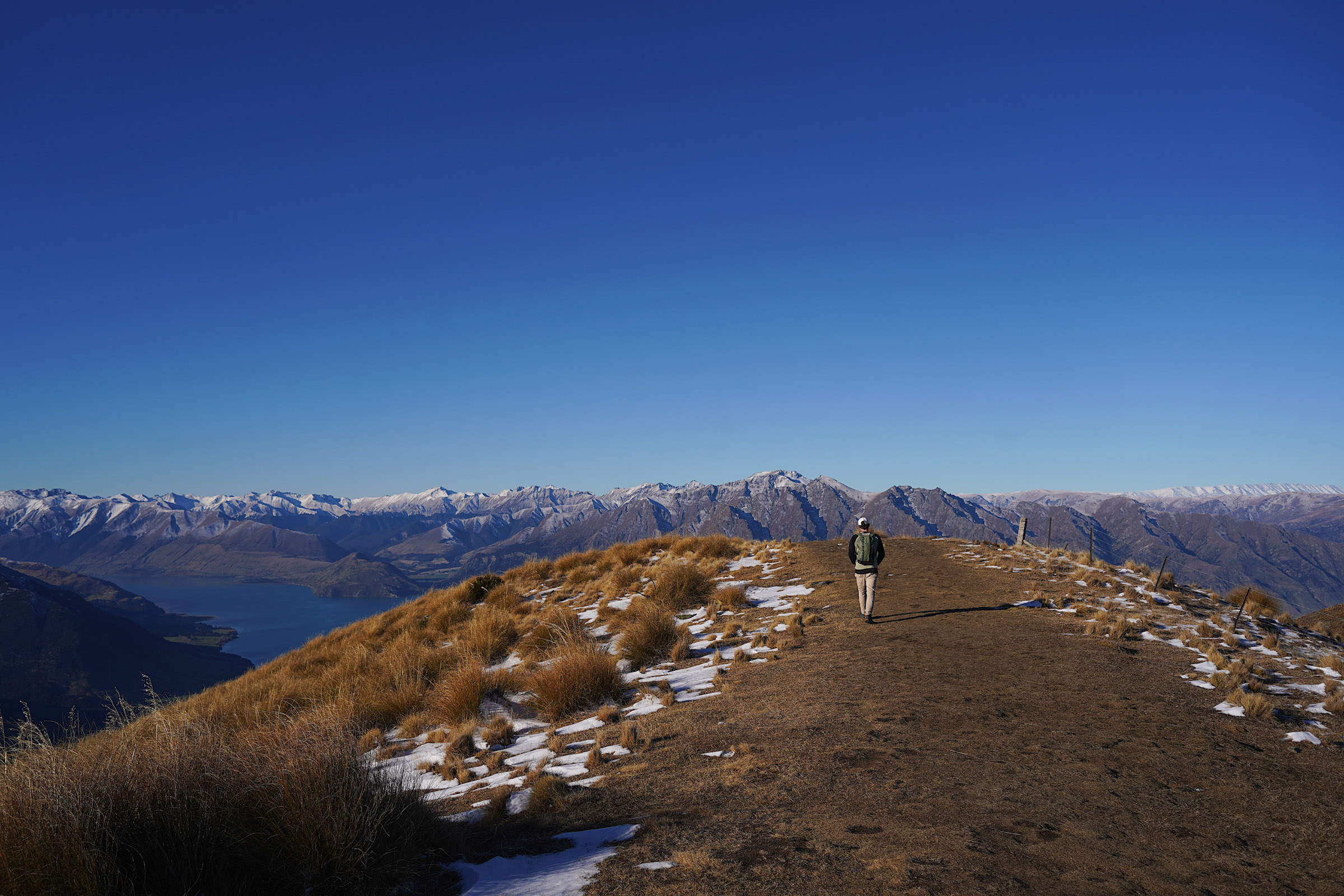
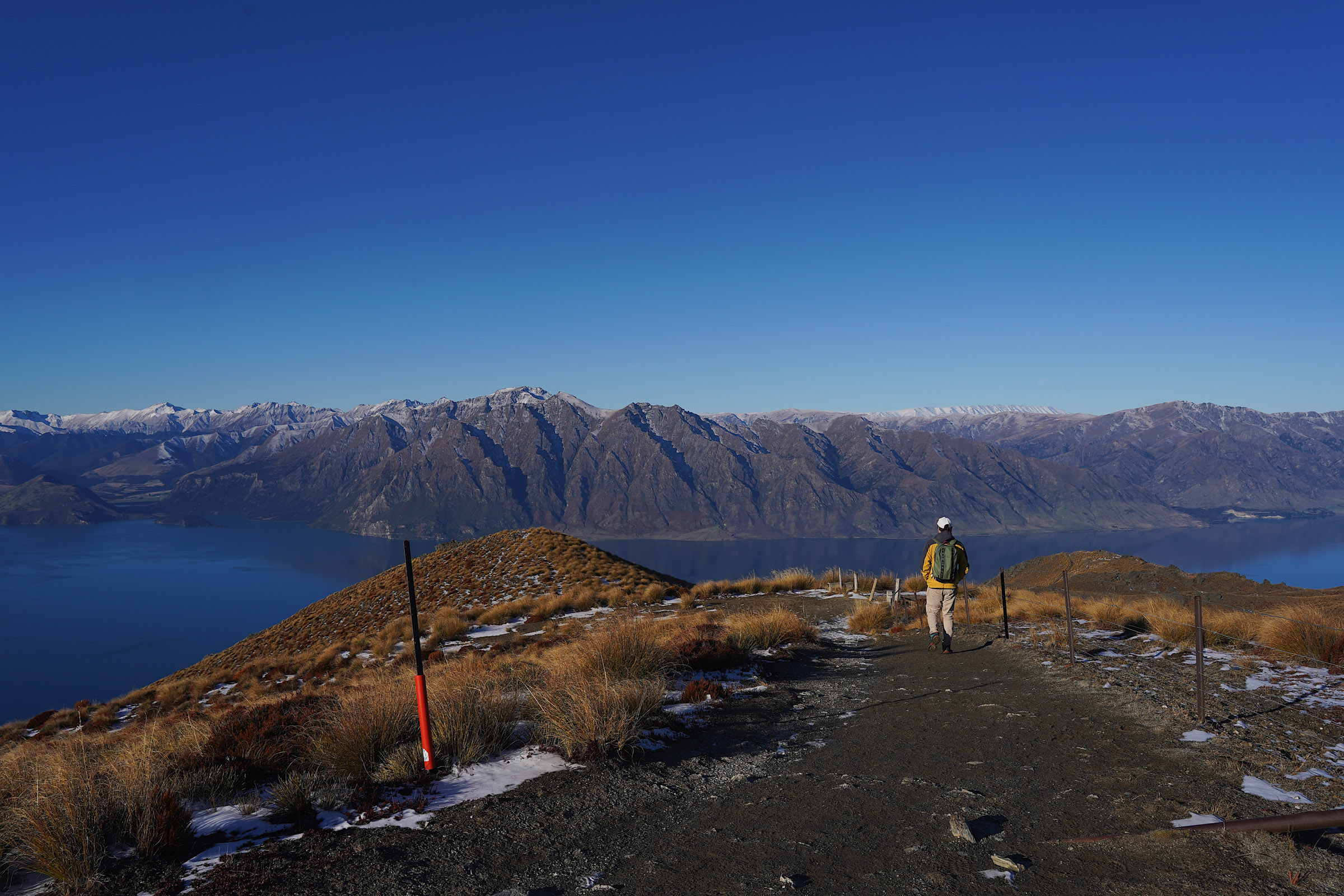
There are plenty of spots along the way to stop and take a photo.
As I said, you can meet deer on the track.
And on the way back you can enjoy the sunset light.
The descent takes a little under three hours. All up the route took me about six to seven hours without rushing. As I wrote above, I walked this track after being ill, and it was noticeably harder than I expected. Between the distance and the constant climbing the route wears you down, so do not underestimate the physical side of it.
And now a short postscript on Roys Peak and Isthmus Peak. These two tracks really are similar to each other, both in the landscape and views and in the distance and elevation gain. Isthmus is slightly longer but with slightly less climbing than Roys, and on both you have to gain more than a thousand metres and walk a long way. Both are physically draining.
They still differ from each other, though. First of all, Isthmus Peak is not as popular, and there will be far fewer people on it. The second difference is that the views on the way up are more varied and more interesting here. On Roys Peak the same picture stays in front of you for the whole climb and the angle barely changes, whereas on Isthmus, as I described above, the scene is a little different every 500 metres.
But the third difference is the final viewpoint, and here Roys Peak wins. It has that famous Instagram view from the summit, with a stunning picture of Lake Wanaka and the mountains of Aspiring National Park. From Isthmus, unfortunately, the views at the top itself are not like that.
If you had to choose between the two, I would not choose and would walk both. But if you only get one, I would go by what matters more to you: how many people there are, how interesting the climb is, or the final viewpoint. Both tracks are good and both deserve to be walked. And I will write a separate report on Roys Peak.